CELPIP Reading Practice Test 11
By Iris
A complete CELPIP Reading practice test: all 4 parts and 38 questions in the real test order. Set a timer for 55–60 minutes and do all four parts in one sitting. Check your answers at the bottom of the page to see your score and an estimated CLB.
In this test
- Part 1: Reading Correspondence, “Book Club Invitation” (questions 1–11) · practise this part alone
- Part 2: Reading to Apply a Diagram, “Pet Grooming Service Packages” (questions 12–19) · practise this part alone
- Part 3: Reading for Information, “Cybersecurity Trends” (questions 20–28) · practise this part alone
- Part 4: Reading for Viewpoints, “Renting vs. Buying a Home” (questions 29–38) · practise this part alone
Part 1: Reading Correspondence
Dear Ravi,
I’m thrilled to let you know I’m launching a book club and would be over the moon if you’d join us! Our inaugural gathering is set for next Thursday, April 15th, at 7 p.m. at my place—I hope that suits your calendar. We’ll settle on a book to dive into each month, exploring different styles to keep it fresh. I’m leaning toward mystery or fiction to kick things off—do you have any genres that spark your interest, maybe something like historical tales or sci-fi?
I’d also love your take on how often we should meet—would a monthly rhythm work, or do you reckon every two weeks might keep the momentum going? Plus, should we split the snack duties—you bring something tasty, or I cover it all? Oh, and one more thing: I’m picturing a cozy group of six to start, but would you prefer we cast the net wider and invite a few more book lovers? I’m eager to hear your ideas—fingers crossed you’re keen to jump in!
Cheers,
Sonia
Sonia is emailing to…
The first meeting is…
Sonia asks about genres to…
The meeting frequency question is about…
Sonia mentions snacks to…
The group size might…
Here is a response to the message. Complete the response by filling in the blanks. Select the best choice for each blank.
Dear Sonia,
A book club sounds like a brilliant idea—I’m definitely in! I’m a big fan of fiction hits the spot for me, though I wouldn’t mind dipping into mystery too. Monthly meetings suit me best lines up nicely with my routine and gives us plenty of time to savor each read. I’m happy to bring snacks works fine, and I could whip up some cookies or chips to share around. A group of six feels just right keeps it cozy and easy to chat, which I think makes for the best discussions! I’ll be there next Thursday with bells on—let me know if .
Cheers,
Ravi
Part 2: Reading to Apply a Diagram
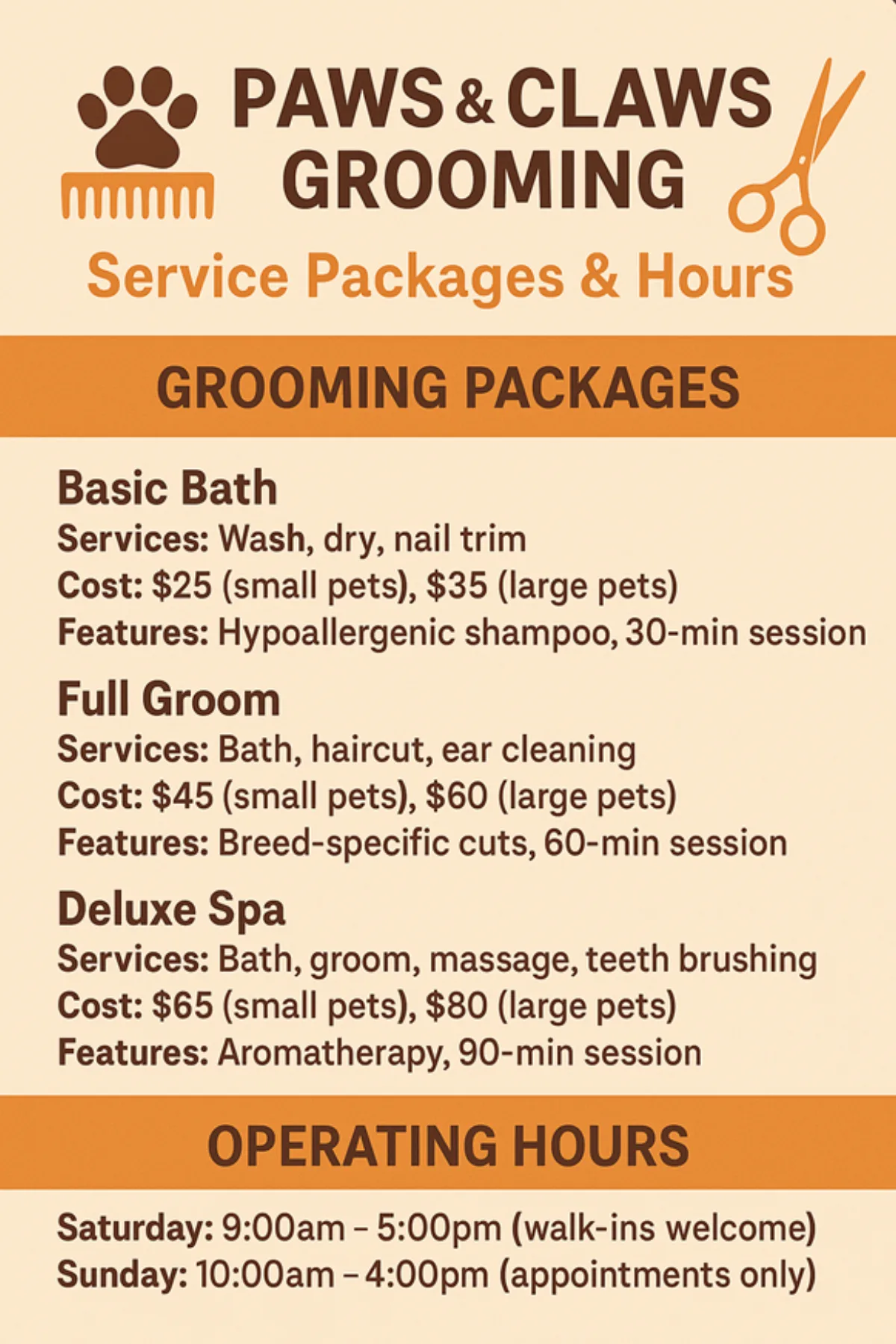
Read the following email message. Complete the email by filling in the blanks. Select the best choice for each blank.
Hi Zoe,
I’m booking my pup at Paws & Claws Grooming, and it’s such a treat! I’m going for since my big dog needs a full makeover. For your little cat, would be perfect—just a quick wash to freshen up. Mine’s which covers a lot. They’re open on Saturday for drop-ins, and on Sunday if you book ahead—early slots go fast! My neighbor’s taking her spaniel too. Want to pamper our pets together?
Cheers,
Mia
Mia is writing this email because...
The Full Groom differs from the Basic Bath in that...
According to the diagram,...
Part 3: Reading for Information
A
Cybersecurity is evolving rapidly as digital threats grow more sophisticated. Artificial intelligence (AI) is now used to detect unusual patterns in network traffic, identifying attacks in real-time. Companies like Microsoft have integrated AI into their security systems. This technology reduces response times but requires constant updates to stay effective. Smaller businesses often lack the resources to adopt such tools.
B
Phishing attacks remain a top concern, tricking users into sharing sensitive information. Cybersecurity firms report a 30% rise in phishing emails targeting remote workers. Training programs teach employees to recognize suspicious links and attachments. These efforts have lowered successful attacks in some industries. However, human error continues to be a weak link.
C
The rise of ransomware has prompted new defense strategies. Hackers lock systems and demand payment to restore access, costing companies billions annually. Regular data backups and multi-factor authentication help prevent losses. In 2024, hospitals were frequent targets, highlighting the need for robust protections. Governments are now cracking down on ransomware networks.
D
Collaboration between industries is strengthening cybersecurity. Tech firms share threat intelligence to warn others about emerging risks. For example, the Cyber Threat Alliance enables real-time data exchange among members. This cooperation has disrupted major cyberattacks before they spread. Still, privacy concerns limit how much data companies are willing to share.
Decide which paragraph, (A) to (D), has the information given in each statement below. Select (E) if the information is not given in any of the paragraphs.
- AI is used to detect cyber threats in real-time.
- Phishing attacks have decreased significantly in recent years.
- Regular data backups help protect against ransomware.
- The Cyber Threat Alliance facilitates data sharing.
- All businesses can afford advanced cybersecurity tools.
- Remote workers are targeted by phishing emails.
- Cybersecurity training eliminates all human errors.
- Hospitals were frequent ransomware targets in 2024.
- Collaboration has no impact on cybersecurity.
Part 4: Reading for Viewpoints
The choice between renting and buying a home remains a pivotal decision, sparking debate over financial, lifestyle, and long-term implications. In Denver, where housing costs are rising, residents and experts weigh the merits of each option. Dr. Sarah Lin, an economist, favors renting for its flexibility. “Renting allows mobility and avoids maintenance costs, ideal for young professionals,” she says. However, she cautions that unpredictable rent increases can strain budgets. In contrast, Michael Grant, a homeowner, champions buying. “Owning builds equity and offers stability, especially in a volatile market,” he explains. He acknowledges that unexpected repair costs can be a burden.
Meanwhile, Olivia Chen, a teacher, adopts a hybrid strategy. “I rent now to save for a down payment, but I plan to buy when the market cools,” she notes. She sees timing as critical to balancing affordability and investment. Conversely, Jamal Carter, a freelance designer, commits to renting. “Buying is too costly, and I value the freedom to relocate for work,” he argues, though he admits renting offers no equity growth. A 2024 Housing Trends Report supports these perspectives, finding that homeownership increases net worth by 40% over a decade, yet 65% of renters prioritize mobility over long-term investment. Critics of renting highlight its lack of asset-building, while homeownership faces scrutiny for high upfront costs and market risks. Housing analyst Elena Vargas offers a balanced view: “Renting suits transient lifestyles, but buying secures wealth. Cities need policies to make both viable—affordable rentals and accessible mortgages.” The decision hinges on financial goals, job stability, and personal priorities, with no universal answer.
Why does Dr. Lin prefer renting?
What does Michael Grant highlight as a benefit of buying?
How does Olivia Chen approach the renting vs. buying decision?
What is Jamal Carter’s main reason for renting?
According to Elena Vargas, what should cities do?
The following is a comment by a reader. Complete the comment by choosing the best option to fill in each blank.
As someone navigating housing options, I find renting for its flexibility, aligning with Dr. Lin’s view on mobility. However, Michael’s point that buying resonates, as I hope to invest in a home someday. Olivia’s strategy because it adapts to financial realities. Still, Jamal’s preference for renting for those like me who prioritize career moves. Policymakers should affordable housing options for both renters and buyers to ensure choices reflect diverse needs.
Answer key
Show all 38 answers
- Sonia is emailing to… B. invite Ravi.
- The first meeting is… C. April 15th.
- Sonia asks about genres to… C. choose books.
- The meeting frequency question is about… B. timing preference.
- Sonia mentions snacks to… D. share duties.
- The group size might… B. grow.
- C. that
- A. that
- C. that
- A. a small group
- B. you need more
- B. Full Groom
- A. Basic Bath
- C. $60
- D. 9:00am - 5:00pm
- A. 9:00am - 5:00pm
- Mia is writing this email because... C. She is inviting Zoe to groom their pets together
- The Full Groom differs from the Basic Bath in that... B. It includes a haircut and ear cleaning
- According to the diagram,... A. Sunday requires appointments
- AI is used to detect cyber threats in real-time. A
- Phishing attacks have decreased significantly in recent years. E
- Regular data backups help protect against ransomware. C
- The Cyber Threat Alliance facilitates data sharing. D
- All businesses can afford advanced cybersecurity tools. E
- Remote workers are targeted by phishing emails. B
- Cybersecurity training eliminates all human errors. E
- Hospitals were frequent ransomware targets in 2024. C
- Collaboration has no impact on cybersecurity. E
- Why does Dr. Lin prefer renting? B. It offers flexibility and no maintenance.
- What does Michael Grant highlight as a benefit of buying? A. It builds equity and stability.
- How does Olivia Chen approach the renting vs. buying decision? C. She rents now but aims to buy later.
- What is Jamal Carter’s main reason for renting? A. It allows mobility and lower upfront costs.
- According to Elena Vargas, what should cities do? B. Support both affordable renting and buying.
- A. impractical
- A. secures long-term wealth
- C. balances short- and long-term goals
- B. suits transient lifestyles
- D. promote
What does your score mean? See the CELPIP Reading score chart.
CELPass is an independent practice platform and is not affiliated with Paragon Testing Enterprises. CELPIP is a trademark of Paragon Testing Enterprises. Check the official CELPIP website and IRCC for current test rules and requirements.