CELPIP Reading Practice Test 50
By Iris
A complete CELPIP Reading practice test: all 4 parts and 38 questions in the real test order. Set a timer for 55–60 minutes and do all four parts in one sitting. Check your answers at the bottom of the page to see your score and an estimated CLB.
Download as PDF with answer key
In this test
- Part 1: Reading Correspondence, “Reunion Weekend” (questions 1–11) · practise this part alone
- Part 2: Reading to Apply a Diagram, “Leadership Summit” (questions 12–19) · practise this part alone
- Part 3: Reading for Information, “Vancouver's Waterfront Station” (questions 20–28) · practise this part alone
- Part 4: Reading for Viewpoints, “Can Public Money Support” (questions 29–38) · practise this part alone
Part 1: Reading Correspondence
Dear Paul,
Sorry it took me so long to write back! Work has finally settled down, and I can start making plans for the reunion at last.
My shifts at St. Clair General were changed in the spring, and I now get 3 days off in most weeks instead of 2, which my manager says will stay that way for good. The four of us have not been in the same room since university, and I know I am just as much to blame for that as anyone. So how about the Thanksgiving long weekend? The holiday falls on my days off, and nobody would have to use a vacation day to travel. Jenny had mentioned the last weekend of the month, but as far as I can tell that one would cost each of us a day off work.
I'd also like everyone to come to Toronto this time. Meeting in Ottawa sounds fair, but my daughter Lily is only 3 and I'd rather not drag her on a long trip. The drive is shorter for Jenny and Marcus anyway, and for you the train practically drops you at my door, since my apartment is a 10-minute walk from Union Station. I have a guest room and a pull-out couch, so nobody has to book a hotel, and it's a lot easier to feed everyone here. We painted Lily's room last weekend. Because she picked the colour herself it is now very, very purple, but she loves it and keeps asking when "the visitors" are coming so she can show them!
Jenny and Marcus both answered the same day and said the dates work for them. Marcus still has to ask his supervisor if he can leave early on the Friday, and if not, he'll drive in on the Saturday morning, so that's really the only detail left.
Anyways, let me know what you think, and if the dates don't work for you, just say so and I'll look at the calendar again. Oh, and do you still cycle? I only have one bike here, so I'd have to borrow a second one from my neighbour if we want to ride along the lake.
Can't wait to see all of you!
Love,
Sarah
Why did Sarah write this letter?
If the dates don't suit Paul, Sarah will probably
Sarah's new work schedule
Why does Sarah prefer the Thanksgiving weekend?
Marcus
How is this letter best described?
Here is a response to the message. Complete the response by filling in the blanks. Select the best choice for each blank from the drop-down menu.
Dear Sarah,
Your letter was such a nice surprise, and please don't apologize for the wait. It's been far too long since the four of us got together, and I'm as you are. Thanksgiving suits me fine, since the other weekend would have meant . Toronto is fine with me too. With Lily being so small, would be too much for her.
I hope Marcus , but Saturday morning isn't so bad either. As for cycling, I sold my bike in the spring when we got a puppy, and now my evenings are all dog walks, so . I'll book my train ticket once I hear from you.
All the best,
Paul
Part 2: Reading to Apply a Diagram
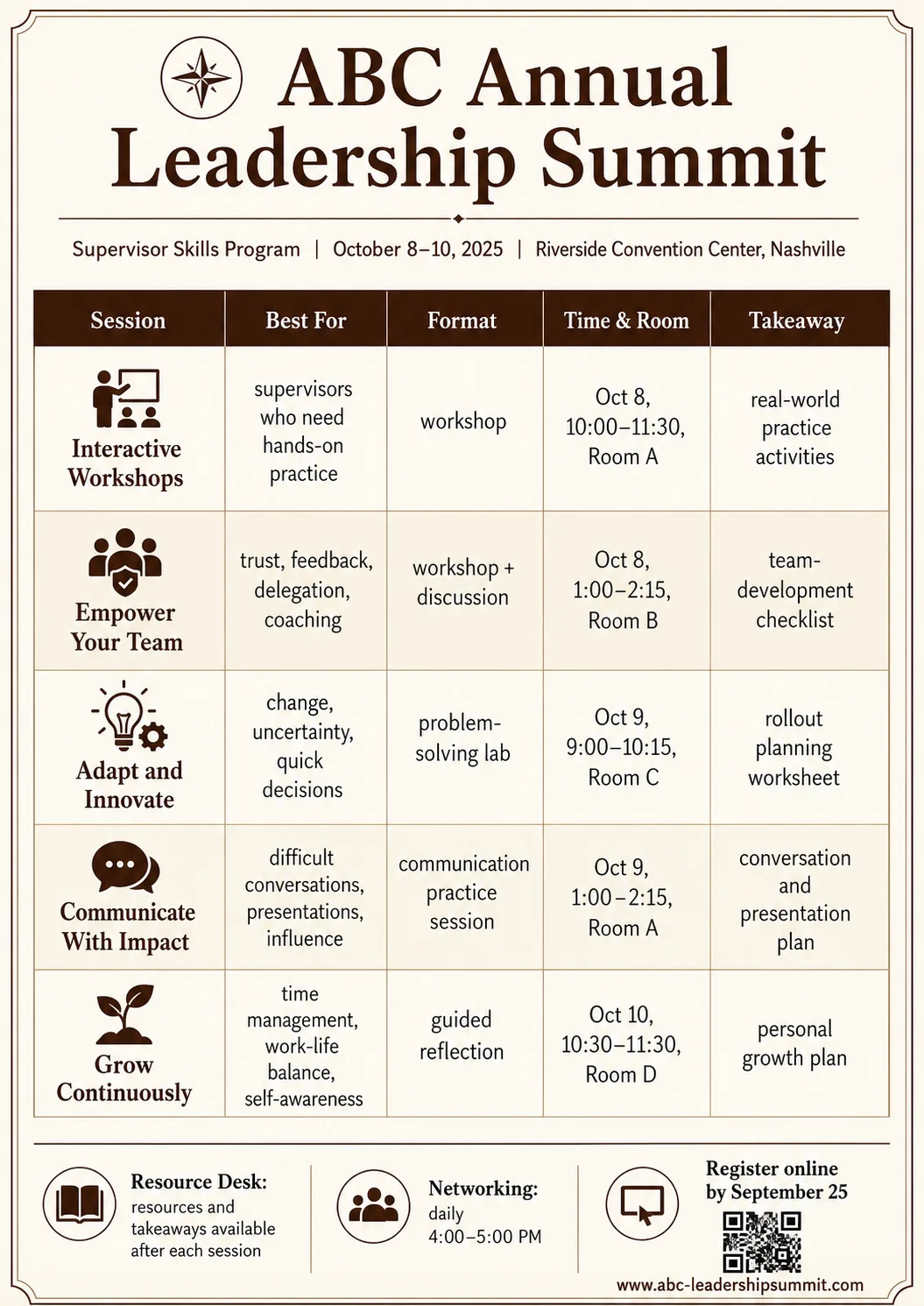
Read the following email message about the diagram on the left. Complete the email by filling in the blanks. Select the best choice for each blank from the drop-down menu.
Hi Liam!
I'm on the early flight, but it doesn't land until noon on the eighth, so the whole first morning is gone. That already rules out . The afternoon slot that day works for me, and looks right. I'm not going to pretend I'll make the 4:00 networking hour after that. An early start on the ninth suits me better, and that one turns out to be a . I'll wait for you outside after the afternoon session on the ninth, and the last morning finishes with a . Three days in Nashville and I still won't see any of it. The registration page took my payment twice. My inbox has one confirmation and two charges, and nobody answers the number on the site.
Best,
Maya
From this note, Maya and Liam …
Maya's chief purpose is to …
Maya's manner about her limits is …
Part 3: Reading for Information
Paragraph A
The terminal overlooking Vancouver's waterfront is the third structure the Canadian Pacific Railway has erected in that corner of the city. The earliest stood at Port Moody, well beyond the fledgling downtown, back in the 1880s, while its successor, near Granville Street, survived little more than a decade. The present building, the work of a Montreal architectural partnership, received its first passengers in 1914 and thereafter served for half a century as the western terminus of the company's transcontinental line. Travellers descending beneath its columns had typically endured several days aboard a train originating in Montreal or Toronto.
Paragraph B
The structure is a deliberate exercise in neoclassical grandeur. Its red-brick façade is rigorously symmetrical, fronted by a row of pale, fluted columns in the Greek manner that reappears indoors along the walls of a spacious waiting hall. Suspended above that interior colonnade are sweeping landscape murals, completed two years after the terminal's opening, depicting the scenery a passenger would encounter along the transcontinental route. Federal recognition as a National Historic Site arrived roughly six decades later. A subsequent restoration cleaned and stabilized the exterior brickwork, though the interior fittings were left untouched.
Paragraph C
Its function as an intercity terminal ceased during the 1970s. VIA Rail, which had assumed responsibility for the passenger services of both national railways, gradually shifted its Vancouver operations to the Canadian National terminal at the opposite edge of downtown. The final scheduled departure, bound for Montreal, carried roughly two hundred passengers on an October afternoon in 1979. Within a few years the platforms and a portion of the adjoining tracks had been dismantled, opening up a broad corridor of land beside and beneath the historic building — ground along which the region's first rapid-transit line would later be laid.
Paragraph D
The building was, meanwhile, acquiring an entirely different civic function. The SeaBus, a passenger ferry, began operating from an adjacent berth two years before that final train departure, ferrying commuters across the harbour to Lonsdale Quay in North Vancouver in scarcely a quarter of an hour. Rapid transit arrived within the decade, when the inaugural SkyTrain line opened directly from the station. A commuter rail service from the eastern suburbs followed ten years afterward, and a further line running south to Richmond and the airport was added early in this century. Four distinct services now converge on the site, which handles the heaviest volume of daily traffic anywhere on the regional transit network — somewhere in the neighbourhood of 50,000 movements.
Paragraph E
Not given in any of the above paragraphs.
Decide which paragraph, A to D, has the information given in each statement below. Select E if the information is not given in any of the paragraphs.
- Dismantling old rail infrastructure created room that a newer mode of transport would later occupy.
- People stepping off the train had typically been travelling for more than a single day.
- The names of the architects who designed the building are recorded in the passage.
- The Greek-style columns on the exterior are matched by identical ones in an interior space.
- The harbour crossing by ferry takes close to a quarter of an hour.
- Two other buildings had already served this purpose in the vicinity before the present one was built.
- Ferry service across the harbour was already operating before the last passenger train left the station.
- The interior artwork was added only after the building had already begun operating.
- The most recent restoration also refurbished the interior fixtures.
Part 4: Reading for Viewpoints
After the Harbourside Ledger stopped covering zoning appeals, attendance at the city's appeal hearings fell, while applications themselves did not. Residents told the library that they often learned of hearings only after decisions were posted. Council is now considering annual grants for local reporting. The coincidence does not prove that the lost coverage caused lower attendance, but it identifies an information gap that meeting notices alone have not filled. The policy question is whether public money can address that gap without making journalists dependent on the officials they scrutinize.
Former editor Lena Cho supports production grants awarded for published work such as hearing summaries, document analyses, and neighbourhood investigations. She would let any newsroom or freelance team apply and require recipients to disclose funding beside each supported article. That requirement identifies support without directing editorial content. Cho rejects grants tied to audience size because investigations serving small districts may have high civic value. However, payment after publication could exclude new outlets unable to finance months of work in advance, leaving established organizations better positioned to win supposedly open funding.
The municipal communications office proposes hiring two city reporters as public employees. They would provide useful explanations of budgets, livestream hearings, and answer residents' questions. Newsroom representatives oppose that model because public employees cannot independently decide that the city's own framing deserves investigation. They favour an arms-length trust whose board includes librarians, journalists from outside Harbourside, and randomly selected residents. The trust would publish criteria before accepting applications and could provide staged payments, addressing the cash-flow barrier in Cho's approach.
Harbourside should fund the independent trust for three years and reject an in-house newsroom. The trust must award grants for defined reporting projects, publish reasons for each decision, and bar current politicians and municipal managers from its board. This arrangement cannot guarantee excellent journalism, nor does the attendance decline prove what residents will read. It does, however, separate the city's legitimate interest in accessible civic information from control over editorial choices. Public money is defensible here only when officials can inspect the grant process but cannot select the questions that funded reporters ask.
What public-interest concern supports the funding firewall?
Article-level disclosure is meant to
Cho rejects audience-based grants because
The trust's mixed board promotes
What distinction does the in-house proposal reveal?
The following is a comment by a visitor to the website page. Complete the comment by choosing the best option to fill in each blank.
The decline after the Ledger closed is rather than causal proof. Combined with residents learning of hearings late, it justifies addressing the information gap without promising that grants will restore attendance. Letting new outlets apply is not enough if payment arrives after publication. Applicants still need to perform the work first, which makes formal eligibility less useful to underfunded teams. Cho's production-grant model lets a freelance team compete , so eligibility does not depend on belonging to an established newsroom. City employees cannot independently challenge municipal framing, while the trust's published reasons make grant decisions without turning officials into editors. A three-year trust is best treated as . Neither the attendance pattern nor the grant design guarantees excellent journalism or a restored audience, so renewal should depend on evidence.
Answer key
Count your correct answers, then find your estimated CLB:
Show all 38 answers
- Why did Sarah write this letter? B. to suggest dates for a get-together
- If the dates don't suit Paul, Sarah will probably A. look for another weekend.
- Sarah's new work schedule D. gives her one more day off in most weeks.
- Why does Sarah prefer the Thanksgiving weekend? D. No one would miss a day of work.
- Marcus A. may only get there on Saturday.
- How is this letter best described? C. eager
- A. every bit as much at fault
- C. using up a vacation day
- D. the trip to Ottawa
- B. gets Friday afternoon off
- B. don't bother borrowing one
- A. Interactive Workshops
- C. Empower Your Team
- D. problem-solving lab
- D. Room A
- A. personal growth plan
- From this note, Maya and Liam … C. are both attending the summit
- Maya's chief purpose is to … C. set out her own plan
- Maya's manner about her limits is … D. frank
- Dismantling old rail infrastructure created room that a newer mode of transport would later occupy. C
- People stepping off the train had typically been travelling for more than a single day. A
- The names of the architects who designed the building are recorded in the passage. E
- The Greek-style columns on the exterior are matched by identical ones in an interior space. B
- The harbour crossing by ferry takes close to a quarter of an hour. D
- Two other buildings had already served this purpose in the vicinity before the present one was built. A
- Ferry service across the harbour was already operating before the last passenger train left the station. D
- The interior artwork was added only after the building had already begun operating. B
- The most recent restoration also refurbished the interior fixtures. E
- What public-interest concern supports the funding firewall? C. It separates funding from topic control
- Article-level disclosure is meant to C. identify funding without directing content
- Cho rejects audience-based grants because A. small investigations may serve civic needs
- The trust's mixed board promotes D. distance from current city officials
- What distinction does the in-house proposal reveal? B. useful official explanation and editorial independence
- B. suggestive contextual evidence
- D. upfront financial capacity
- C. alongside newsroom applicants
- D. publicly reviewable
- C. a reviewable trial period
What does your score mean? See the CELPIP Reading score chart.
Free CELPIP practice test · Free CELPIP Listening practice tests · CELPIP sample tests by part
CELPass is an independent practice platform and is not affiliated with Paragon Testing Enterprises. CELPIP is a trademark of Paragon Testing Enterprises. Check the official CELPIP website and IRCC for current test rules and requirements.