CELPIP Reading Practice Test 86
By Iris
A complete CELPIP Reading practice test: all 4 parts and 38 questions in the real test order. Set a timer for 55–60 minutes and do all four parts in one sitting. Check your answers at the bottom of the page to see your score and an estimated CLB.
Download as PDF with answer key
In this test
- Part 1: Reading Correspondence, “Rebuilding Grandpa’s Front Porch” (questions 1–11) · practise this part alone
- Part 2: Reading to Apply a Diagram, “Transit Pass and Parking for a New Commute” (questions 12–19) · practise this part alone
- Part 3: Reading for Information, “Whooping Cranes Back From The Brink” (questions 20–28) · practise this part alone
- Part 4: Reading for Viewpoints, “Later High School Start Time Debate” (questions 29–38) · practise this part alone
Part 1: Reading Correspondence
Dear Aunt Lorraine,
I hope you’re enjoying the cooler weather. I’ve been meaning to write since the summer, but the house has taken over my life. When I bought Grandma and Grandpa’s place last spring, I planned to start by replacing the drafty old windows. Then the home inspector crawled under the front porch and came out shaking his head. Several of the support beams had rotted, and he warned me that the whole thing could give way under a heavy load of snow. The windows will have to wait until next year; the porch simply couldn’t.
The contractor I hired, Dale, has been wonderful, though he did give me a surprise when he pulled up the old floorboards. Tucked between two beams was a rusty tin box full of letters and black-and-white photographs. Some of them show you and Uncle Ray as kids, sitting on those very steps with a dog I don’t recognize. I’ve put everything in a dry folder for now. The paper is so brittle that I don’t dare mail it, so I’ll bring the whole box when I come to your place for Thanksgiving.
That brings me to a favour. Dale suggested composite boards for the new porch, since they never need painting and would cost less over the years. I know he’s right, but I can’t bring myself to do it. Grandpa built that porch with his own hands, and I want it to look the way it did when he finished it, right down to the railings. The trouble is that I can’t remember their pattern. Were the spindles plain, or did they have the diamond cut-outs I keep picturing? If you have a photo that shows the front of the house clearly, could you send me a copy? Dale’s crew will start on the railings in the third week of October, and after that they’re booked solid until spring.
As you can imagine, the rot pushed me well past my budget, by about $3,000. Kevin kindly offered to lend me the money, but I’d rather not owe my little brother anything, so I’ve told Dale I’ll do all the painting and staining myself. My evenings are going to be busy! Once it’s finished, though, I hope you’ll come and sit on the porch with me, just like old times.
Love,
Meghan
What is the main purpose of Meghan’s letter?
Meghan repaired the porch before the windows because
It can be inferred that Aunt Lorraine
Why does Meghan turn down Dale’s suggestion of composite boards?
Meghan needs the photo soon because
How is Meghan dealing with the extra $3,000?
Here is a response to the message. Complete the response by filling in the blanks. Select the best choice for each blank from the drop-down menu.
Dear Meghan,
What a lovely surprise to get your letter! I had no idea the porch was in such poor shape. It’s lucky your inspector before winter, or someone could have been hurt.
I went through my albums last night and found exactly what you need: a picture of Dad on the front steps the summer he finished building. You can see every one of the , and yes, they had the diamond cut-outs you remember. I’ll post a copy tomorrow so it reaches you well .
As for the letters in that tin box, I’m so glad you ; some of them must be seventy years old! And good for you for . Kevin means well, but you’ve always liked to stand on your own two feet.
Of course I’ll come and sit on that porch with you. Just save me the chair by the door!
Love,
Aunt Lorraine
Part 2: Reading to Apply a Diagram
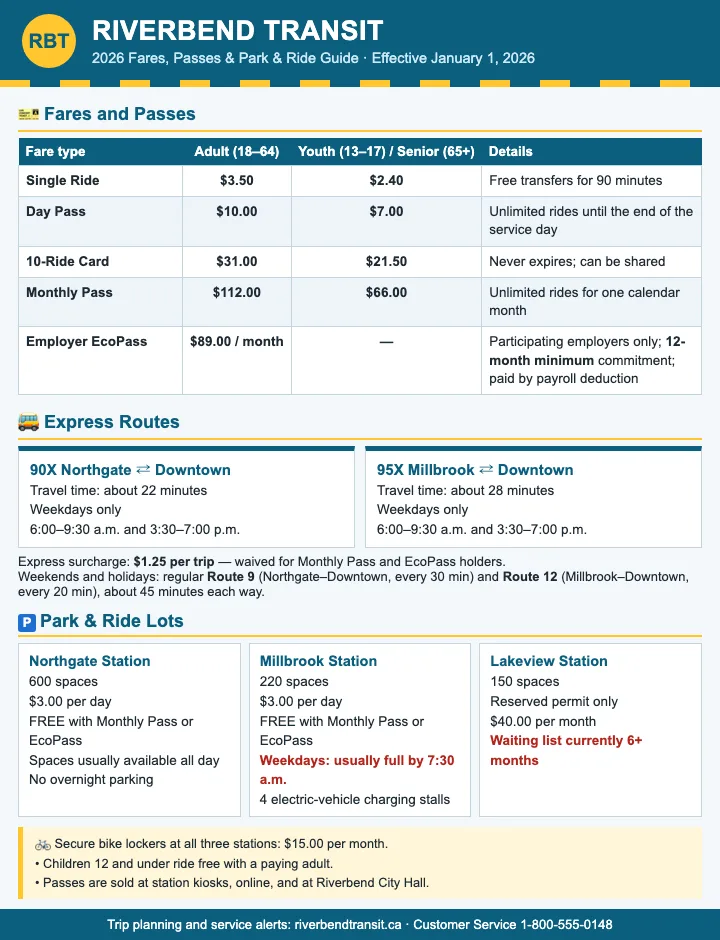
Read the following email message about the diagram on the left. Complete the email by filling in the blanks. Select the best choice for each blank from the drop-down menu.
Subject: Getting downtown from the new place
To: Elena Vasquez
From: Marcus Byrne
Hi Elena,
Your sister tells me you’ve finally signed the lease in Millbrook, so congratulations! Your sister and I did that commute for years before the kids were born, so I picked up the new transit guide for you.
I know the hospital takes part in the EcoPass program, but with only a six-month contract you won’t qualify, so the is your best bet. It also means you won’t have to pay an extra on the express bus.
You might think the Millbrook lot is the obvious choice since it’s two minutes from your apartment, but your shift starts at 9:00, and by the time you get there . I’d drive the extra ten minutes to instead. You’ll have plenty of spaces to choose from, and the longer drive is a small price to pay for not circling a full lot every morning.
One more thing: the express buses don’t run on the Saturdays you work, so you’ll need to . It takes longer, so leave yourself some extra time.
Come for dinner once you’ve unpacked. The kids keep asking when their aunt is visiting!
Marcus
Marcus and Elena know each other because
Why can’t Elena use the Employer EcoPass?
When Marcus says the longer drive is “a small price to pay,” he means that
Part 3: Reading for Information
Paragraph A
Standing about one and a half metres tall, the whooping crane is the tallest bird in North America. Adults are bright white, with black wingtips that can be seen only when the wings are spread and a patch of red skin on the crown. The species takes its name from its loud, trumpeting call, which can be heard from a great distance across open marshland. The cranes were once found across much of the continent’s interior, but as settlers drained wetlands to create farmland and hunters shot the birds for food and feathers, their numbers collapsed. By the early 1940s, fewer than two dozen whooping cranes survived in the wild, and many experts expected the species to disappear.
Paragraph B
One of the greatest obstacles to saving the birds was that no one knew where they raised their young. Each autumn the remaining flock arrived on the Gulf Coast of Texas, but its summer home remained a mystery for years. The answer came unexpectedly in 1954, when people working on a forest fire in a remote part of Wood Buffalo National Park spotted cranes from the air. The park, which straddles the border between Alberta and the Northwest Territories, is still the only natural nesting ground of the original wild flock. Every spring, the birds fly roughly 4,000 kilometres north to its isolated wetlands, returning to Texas in the fall.
Paragraph C
Recovery has depended on close cooperation between Canada and the United States. Both countries gave the cranes legal protection and worked to safeguard important habitat. Biologists also made use of a simple observation: although a pair usually lays two eggs, it rarely raises more than one chick. Beginning in the late 1960s, researchers removed one egg from some nests in Wood Buffalo and hatched the chicks in captivity, building up breeding flocks without reducing the number of young produced in the wild. Captive-bred birds were later released in an effort to establish new flocks elsewhere. In one well-known project, young cranes learned a migration route by following a small, slow-flying aircraft.
Paragraph D
Today, the wild flock that travels between Wood Buffalo and Texas numbers more than 500 birds, making the whooping crane one of North America’s best-known conservation success stories. Experts warn, however, that the job is not finished. Whooping cranes do not breed until they are several years old and raise few young, so the population can only grow slowly. Collisions with power lines kill birds during migration, and because almost all of the only self-sustaining wild flock depends on the same two areas, a single disaster, such as a major storm or an oil spill on the Texas coast, could undo decades of progress. For now, the species remains listed as endangered in both countries.
Decide which paragraph, A to D, has the information given in each statement below. Select E if the information is not given in any of the paragraphs.
- Turning wetlands into fields was one cause of the bird’s decline.
- The cranes’ breeding area was found by people who were not searching for it.
- Canada protected the cranes by law before the United States did.
- Taking eggs for captive breeding did not lower the number of chicks raised in the wild.
- One bad event in a particular place could badly hurt the wild population.
- Visitors to Wood Buffalo National Park can watch nesting cranes from viewing areas.
- The birds make a long journey between their summer and winter homes twice a year.
- Some young birds were taught where to fly with human assistance.
- Some of the crane’s markings are hidden while the bird is standing still.
Part 4: Reading for Viewpoints
Parents in the Prairie Ridge School Division have until month’s end to comment on a proposal that would push the first bell at its six high schools from 8:15 to 9:10 a.m. next September. Later starts are hardly novel, and results elsewhere have been inconclusive. Fresh urgency comes from a division survey in which roughly two-thirds of high school students endorsed a later bell.
Dr. Anika Sorensen, a paediatrician specializing in adolescent sleep, grounds the case in biology, not preference. During puberty the body’s internal clock shifts, leaving most teenagers physiologically incapable of falling asleep before eleven. “Demanding alertness at 8:15 is comparable to expecting an adult to write a mathematics exam at four in the morning,” she maintains. Sorensen is careful not to oversell, though. “If the phone stays under the pillow until one, we’ve simply moved the problem.”
Board chair Gordon Feist does not contest the research, but bus logistics preoccupy him. The same buses currently complete the high school routes first and the elementary runs afterward. Delaying secondary classes would require either adding about twelve vehicles, at an estimated $1.4 million annually, or reversing the sequence, which would leave young children waiting beside country roads in January darkness. “I refuse to resolve one group’s difficulty by bequeathing a worse one to another,” says Feist.
Marisol Quintero’s objections are domestic. Her son, a Grade 11 student, works three afternoons weekly at a grocery store, plays junior hockey and, saving for college, cannot reduce his hours. He also supervises his eight-year-old sister until Quintero returns from her shift. “He’s hardly cheerful at breakfast,” she concedes. “But our schedule’s a puzzle, and this proposal would remove the load-bearing piece.”
Devin Achterberg, student council president at Prairie Ridge Collegiate, favours a later start in principle but distrusts a division-wide switch. “Plenty of my classmates would merely stay up later,” he concedes. The council has instead proposed a one-year pilot in which one school begins at 9:10 every Wednesday, with sleep and attendance monitored throughout. Encouraging data would give trustees evidence persuasive to parents; disappointing results would cost little.
Whose objection, like Feist’s, involves a younger child?
Sorensen’s phone remark suggests that
How does the council’s approach differ from the board’s?
What can be inferred from the article?
Which headline best fits the article?
The following is a comment by a visitor to the website page. Complete the comment by choosing the best option to fill in each blank.
Having taught first-period chemistry for fifteen years, I can vouch for Dr. Sorensen’s main argument: at 8:15, half my students are . Still, Mr. Feist persuaded me more than I expected. No plan is worth adopting if it , and $1.4 million would otherwise reach classrooms.
I sympathize with Ms. Quintero too, though I suspect her real worry is , not hockey. The student council’s idea strikes me as wisest: a would cost little and replace opinion with hard evidence. I also admire the students for admitting . If the pilot succeeds, I will happily back the full change next year.
Answer key
Count your correct answers, then find your estimated CLB:
Show all 38 answers
- What is the main purpose of Meghan’s letter? B. to share news and ask for a family photo
- Meghan repaired the porch before the windows because A. it might collapse under winter snow.
- It can be inferred that Aunt Lorraine D. spent part of her childhood at the house.
- Why does Meghan turn down Dale’s suggestion of composite boards? C. She wants it to look like her grandfather’s work.
- Meghan needs the photo soon because B. the railings will be built in a few weeks.
- How is Meghan dealing with the extra $3,000? A. by doing some of the work herself
- C. checked underneath it
- D. spindles
- A. before Dale’s crew starts the railings
- B. aren’t trusting them to the post
- C. refusing your brother’s offer
- D. Monthly Pass
- A. $1.25 per trip
- B. the lot will probably be full
- C. Northgate Station
- D. take the regular Route 12
- Marcus and Elena know each other because C. Marcus is married to Elena’s sister.
- Why can’t Elena use the Employer EcoPass? A. Her contract is shorter than the required commitment.
- When Marcus says the longer drive is “a small price to pay,” he means that B. the inconvenience is worth the benefit.
- Turning wetlands into fields was one cause of the bird’s decline. A
- The cranes’ breeding area was found by people who were not searching for it. B
- Canada protected the cranes by law before the United States did. E
- Taking eggs for captive breeding did not lower the number of chicks raised in the wild. C
- One bad event in a particular place could badly hurt the wild population. D
- Visitors to Wood Buffalo National Park can watch nesting cranes from viewing areas. E
- The birds make a long journey between their summer and winter homes twice a year. B
- Some young birds were taught where to fly with human assistance. C
- Some of the crane’s markings are hidden while the bird is standing still. A
- Whose objection, like Feist’s, involves a younger child? D. Marisol Quintero’s
- Sorensen’s phone remark suggests that C. a later bell isn’t enough alone.
- How does the council’s approach differ from the board’s? A. It starts at one school.
- What can be inferred from the article? B. Unchanged elementary runs would require more buses.
- Which headline best fits the article? D. “Later Bell: Biology Agrees, Buses Don’t”
- A. still on night time
- B. burdens the youngest instead
- C. who will watch her young daughter
- B. Wednesday-only trial
- D. the weak spot in their own case
What does your score mean? See the CELPIP Reading score chart.
Free CELPIP practice test · Free CELPIP Listening practice tests · CELPIP sample tests by part
CELPass is an independent practice platform and is not affiliated with Paragon Testing Enterprises. CELPIP is a trademark of Paragon Testing Enterprises. Check the official CELPIP website and IRCC for current test rules and requirements.